


What is Legal Knowledge Management Software?
Legal knowledge management software is how a firm makes the knowledge it has built over years of practice actually findable. The approved clause, the rate guideline, the conflicts procedure - they already exist inside your playbooks, engagement templates, and policy documents. The problem is that by the time someone needs one, it is buried in a shared drive, an email chain, or the memory of whoever wrote it three years ago.
Accurez indexes the materials your firm already maintains. People ask in plain language and get the answer back with the source shown when grounded - traceable to what counsel approved, not what someone remembers.

From document to verify answer
How it works in three steps
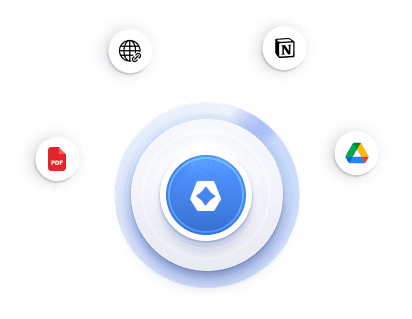
Add your legal documents
Upload PDFs, plain text, or Markdown files directly. You can also sync selected Google Drive folders or Notion pages, or paste a public page URL. After indexing finishes, documents are ready to search.
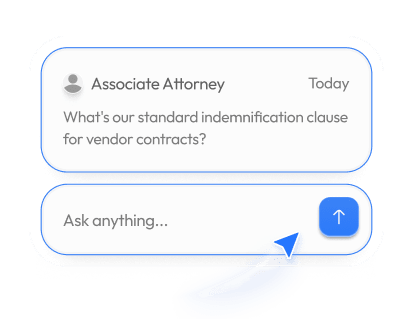
Ask in plain language
Type the question the way you would say it to a practice-group colleague. No query language, no special format. Accurez searches across everything your firm has indexed.

Get a cited answer you can check
You get a direct answer in plain language. If the answer comes from your firm's documents, Accurez shows which document and which section it came from. A confidence level - High, Moderate, or Low - tells your team how strongly the answer is backed before anyone acts on it.
Built for accuracy your firm can trust
Everything listed here ships with Accurez today - built so your firm gets answers that trace back to documents you already own.


Source-backed retrieval from firm playbooks and policies
Ask a question and get the relevant section back with the source document and excerpt shown - so anyone can open the original before relying on the answer.

Confidence indicators that support professional judgment
Every response shows High, Moderate, or Low confidence. High means the source backs it well. Low means verify before acting.

Self-hosted deployment for confidentiality and data residency
Runs on infrastructure your firm operates. Documents and search index stay in your environment. AI provider chosen by your administrators - including a fully local option.

Hybrid retrieval for plain-language firm inquiries
Ask the way you would ask a colleague. Semantic search and keyword matching run together so the right guideline surfaces even when the wording does not match exactly.

Assistants scoped by practice area and function
Corporate, Conflicts, Billing, and Litigation each work from a separate assistant. One firm corpus - controlled retrieval boundaries for each group.

Ingestion from existing firm repositories
Indexes PDFs, plain text, and Markdown. Syncs selected Google Drive folders and Notion pages. Paste a public page URL when needed. No new content system needed before you start.

Visibility controls for confidential and public firm content
Every document is Public, Internal, or Restricted. Ethics procedures and deal playbooks stay in authenticated Workspace. Help Center shows only what your firm approves for external use.

Analytics identifying unanswered firm knowledge needs
See grounded versus no-context rates and frequently unanswered questions - so practice leads know exactly which playbooks are missing.

Security and audit logging with CSV export
Authentication events, admin actions, and chat activity logged with timestamps. Export CSV for offline review. With local AI configured, chat and embeddings stay on firm hardware - data residency depends on the AI provider your admins select.

Streaming responses, chat history, and browse-or-ask access
Answers stream as they generate. Personal chat history lets anyone reopen prior threads. Same content powers both chat and traditional article browse.
Built for roles across your firm
Across legal operations, Accurez delivers cited answers from your firm's own documents.
Pull the firm position before the client call starts
A client call is not the moment to recall what the firm's standard position is on a deal point. Pull the sanctioned playbook language from your own indexed library - source shown, position confirmed - before the conversation begins.

Where your client data lives
Accurez runs on your own servers. Your documents and search index stay within the firm's environment - Accurez does not host your corpus as a default SaaS store.
Your administrators choose the AI provider that fits your firm's policy. For firms that need generation to stay on the network, a local model (for example via Ollama) keeps chat and embeddings on firm hardware. If you choose a cloud AI provider, prompts and retrieved context go to that provider.

Source Citations
Audit Trail
Private Deploy
Local AI Option
Accurez vs Typical cloud knowledge bases
How our Knowledge Base connects with your tools
Bring firm documents into Accurez so practice groups can search and ask from one indexed library.
Direct Document Upload
Upload PDF, plain text, and Markdown files directly into Accurez.
Articles
Write and publish knowledge articles natively inside Accurez with draft, publish, and version history built in.
Website URLs
Paste a public page URL and Accurez indexes the page content into your knowledge base.
Google Drive
Connect once and sync selected Drive folders. Run sync when you want Accurez to pick up updates from those sources.
Notion
Sync selected Notion pages into Accurez so your existing workspace content becomes searchable.
 Coming Soon


See Accurez working live on your own documents
What your session covers:
Walk through the full flow from uploading firm documents to asking a question and getting a cited answer with source citations in real time
See how your playbooks, procedures, and billing guidelines work inside Accurez with answers pulled directly from your own files
Understand how self-hosted deployment works and how your firm chooses between cloud and local AI based on confidentiality needs
Get answers on knowledge workflows, practice-group rollout, and deployment from someone who knows the product

See it working with your own documents
Give your firm cited answers from the documents it already maintains - on infrastructure you control.